The quick answer
TCL is a TV manufacturer, not one receiver platform. Two TCL televisions can have different sharing features because one runs Roku TV while another runs Google TV, Fire TV, or Android TV.
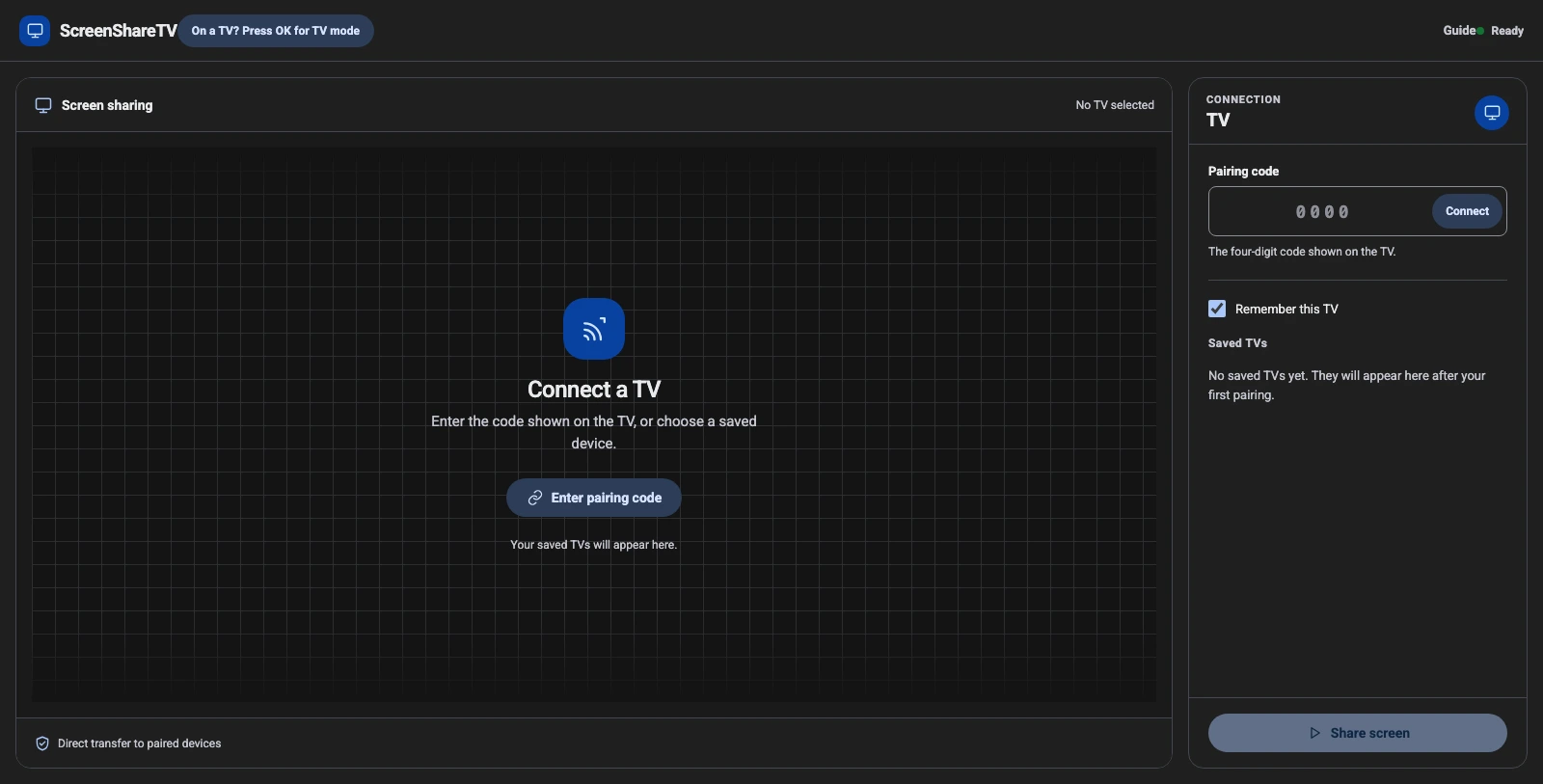
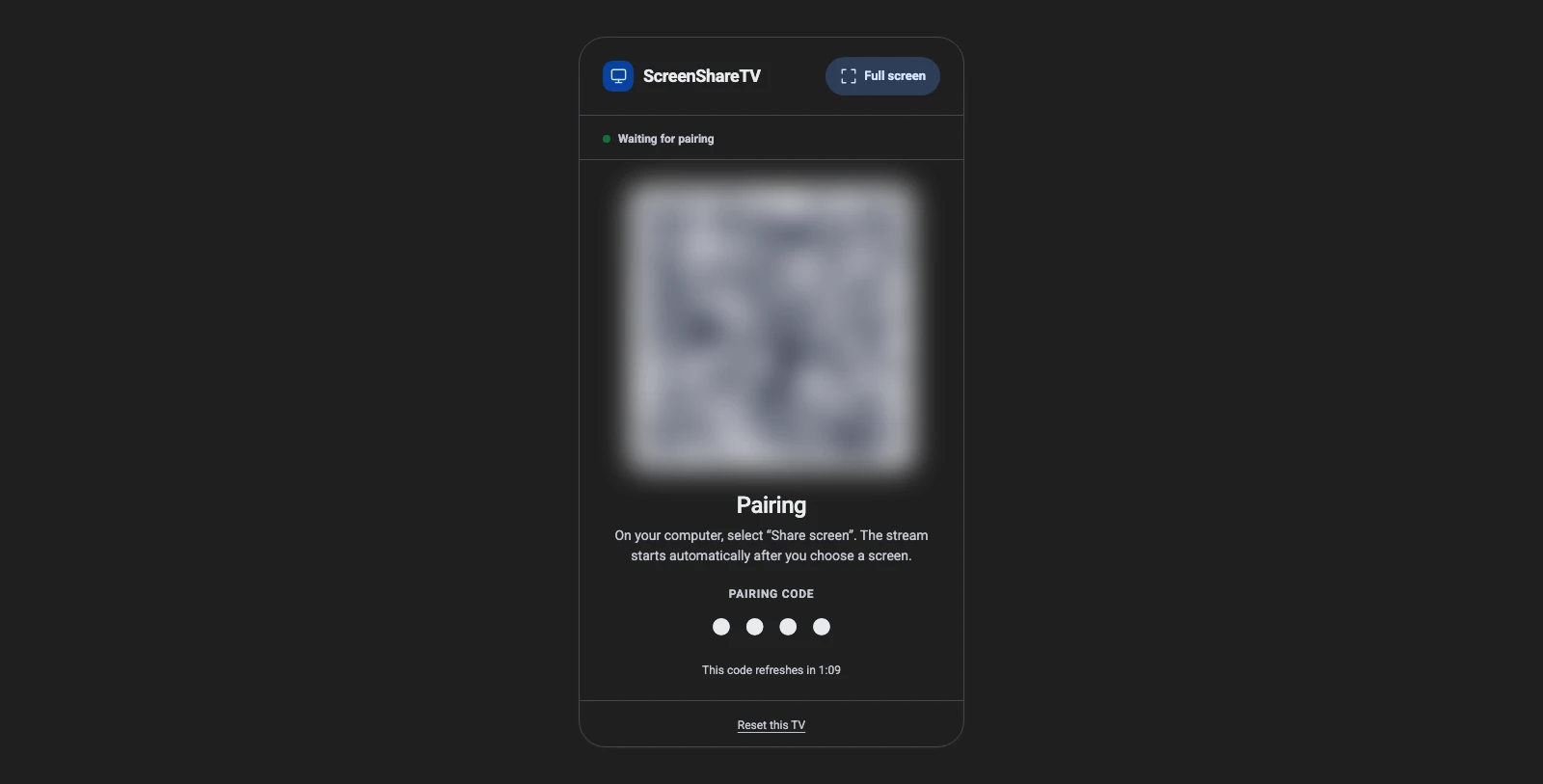
Use ScreenShareTV when the receiver can open TV mode in a compatible browser. The TV presents a QR code and short PIN, then the sender chooses a screen from the browser’s own picker. Use the TCL native path when its receiver features fit the devices in front of you. These are separate choices, and neither one proves that the other is available.
1. Identify this TCL TV before you start
Start from the TCL home screen and identify the platform name before searching for mirroring settings. Record the exact model, then follow the platform-specific help path rather than a generic TCL instruction.
That short check prevents the most common setup mistake: following a guide for a different platform because the television brand matches. Receiver software, region, model year, and sender operating system all matter more than the logo on the bezel.
3. When the native TCL route is the better choice
The operating system determines the native TCL sharing route
A TCL Roku TV follows Roku mirroring and AirPlay rules. A TCL Google TV typically follows Cast-oriented guidance, while a TCL Fire TV follows Fire TV display-mirroring capabilities. The same remote button cannot be expected across those systems. Once you identify the platform, use that platform’s supported native method or choose HDMI for a direct connection.
What this TCL platform changes
The exact television model and its receiver platform decide which native sharing choices can appear. Check the TV settings before using a sender-side control.
Use the current TCL model and platform support and the manual for the exact model as the authority for menu names and feature availability. Manufacturer instructions can change with TV software updates, and a menu shown in a video or on a different model may not exist on yours. Read the official support reference: TCL: screen mirroring to a TCL Google TV.
4. Sender-device differences: PC, Mac, Android, and iPhone
Windows and Android senders often have platform-specific mirroring choices; Mac, iPhone, and iPad commonly depend on AirPlay where it is supported. A sender browser can use ScreenShareTV only when the receiver browser succeeds in TV mode. That test is useful because it avoids implying that a TCL platform browser supports WebRTC merely because the hardware is modern.
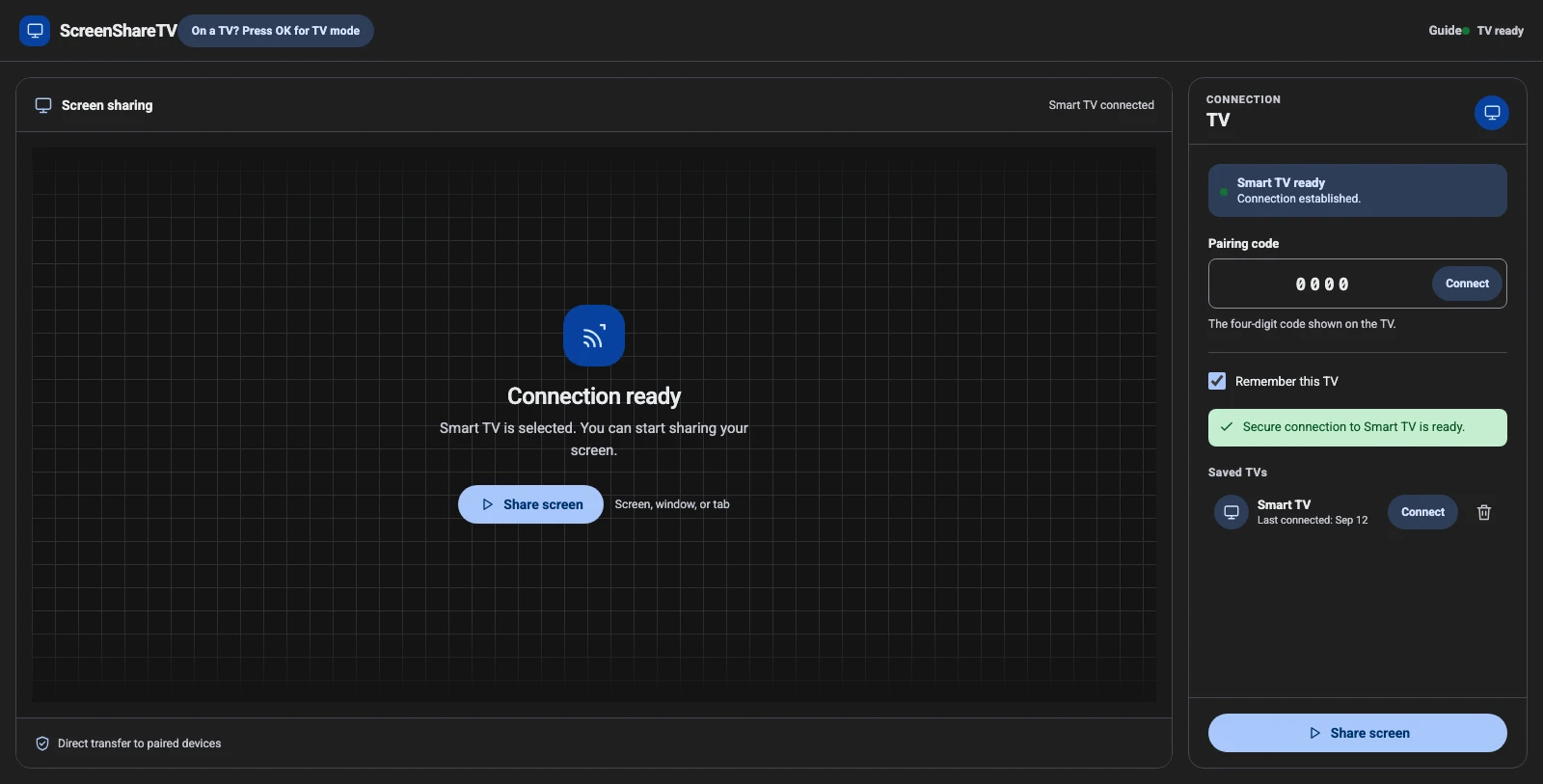
For ScreenShareTV, the sender-side rule is simpler: start sharing only from a deliberate user action in a supported browser. If the protected browser picker does not expose an entire display, tab, window, or system audio choice, that limitation comes from the operating system or browser—not from the pairing page.
5. Full-screen viewing, sound, and quality
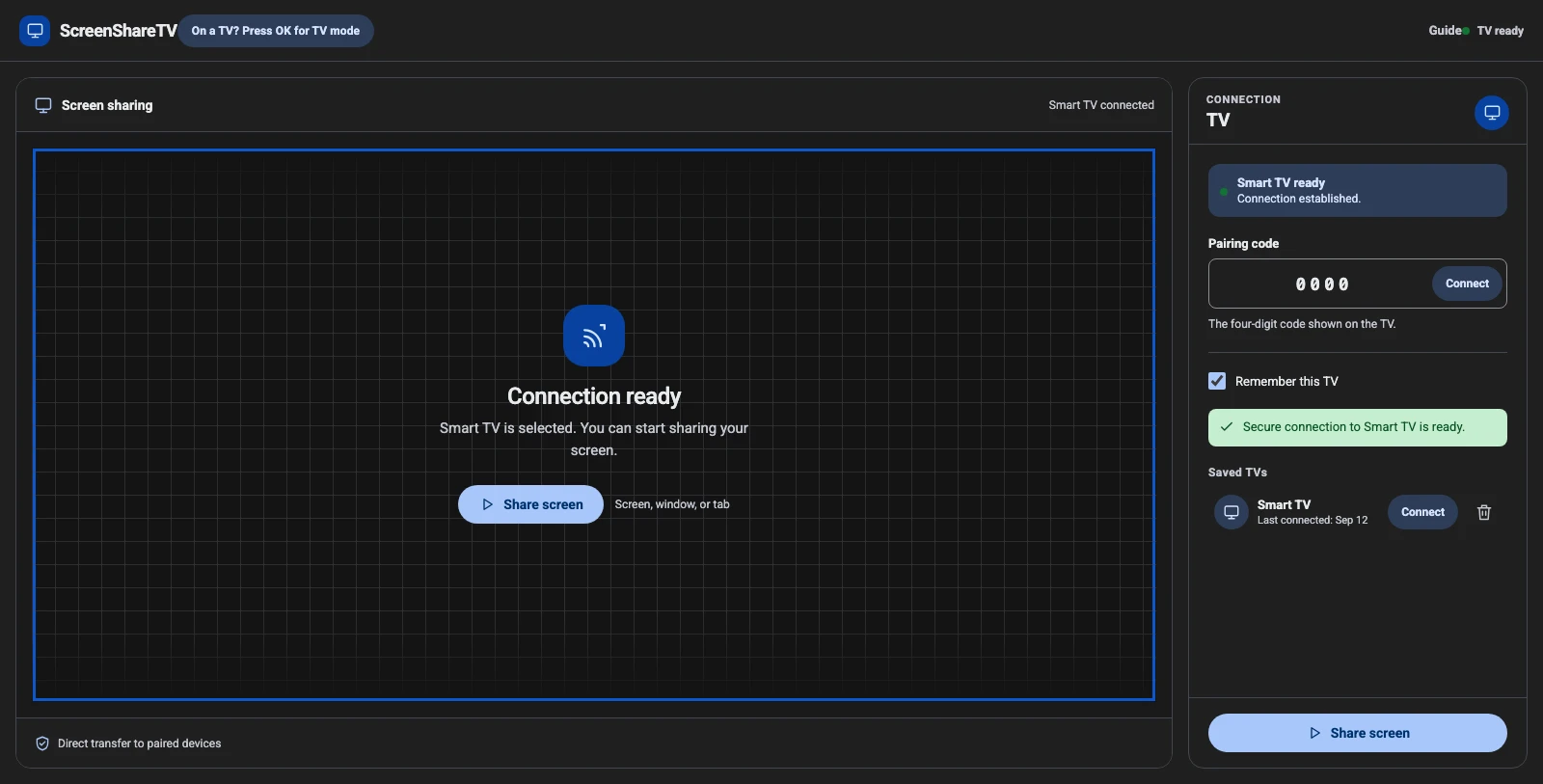
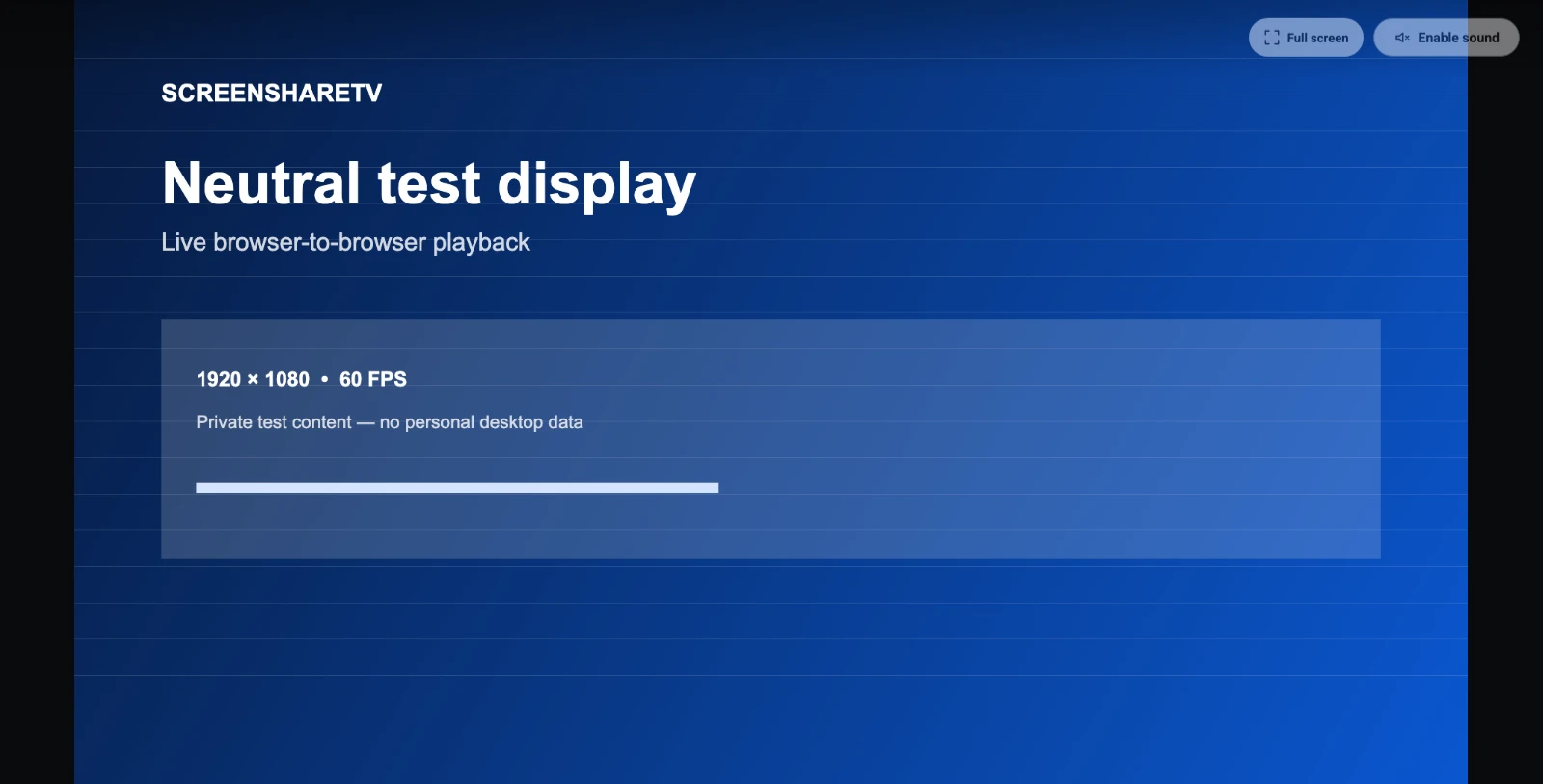
Use the TV’s full-screen control after playback starts. On supported receivers, ScreenShareTV begins safely muted to avoid autoplay blocks; the viewer can explicitly enable sound. Quality adapts to the sender, receiver, browser, and available route. A stable wired connection or strong Wi-Fi helps more than forcing an unsupported resolution.
For the cleanest full-HD or higher-quality session, keep the sending computer on power, avoid VPN or Wi-Fi roaming during the stream, close large background uploads, and select only the display or window you intend to show. If a direct route is unavailable, WebRTC can use the configured relay path; the experience can still work but may have different bandwidth and latency characteristics.
6. TCL troubleshooting
- The guide says Roku but the TV home screen says Google TV: stop and use the Google TV route instead.
- The TV name is duplicated in a device list: confirm the platform and room name before selecting it.
- Only one sender can connect: end the native session or ScreenShareTV session before starting another receiver flow.
When a native route fails, test whether the issue is discovery, permissions, or a model limitation before resetting the television. When ScreenShareTV fails, inspect the explicit receiver state, re-open TV mode, and begin a fresh pairing session. Do not share QR tickets or PINs in public messages.
7. Privacy and pairing boundaries
ScreenShareTV carries pairing and WebRTC signaling information so the two browsers can connect. It is not a cloud screen-recording service, and it does not silently capture the sender display. The screen is selected in the browser picker, the receiver session is visible on the TV, and the sender can stop the stream at any time.
TCL native sharing has its own privacy prompts, device lists, accounts, and receiver permissions. Treat those prompts as belonging to the native platform; they are not controlled by ScreenShareTV.
TCL screen-sharing FAQ
Does ScreenShareTV work with every TCL TV?
No. ScreenShareTV works only when the receiving display can open TV mode in a browser that supports the required secure WebRTC capabilities. Native TCL sharing support is a separate question and can vary by model. A recent television can still have a restricted browser, and a television with excellent native casting can still be unsuitable as a browser receiver. The explicit compatibility state in TV mode is the source of truth for this route.
Do the TV and sender need the same Wi-Fi network?
Native TCL sharing commonly expects the same local network because the sender must discover a nearby receiver. ScreenShareTV pairing begins through its signaling service and the best route is selected by WebRTC, but a stable local network usually gives the most predictable experience. Guest Wi-Fi, client isolation, captive portals, VPN changes, and Wi-Fi roaming can all change the result. For a long presentation, test the exact route before the audience arrives.
Can I share sound as well as the screen?
Where the sender browser and operating system expose system-audio sharing, choose it in the browser’s protected picker. The TV can begin muted because television browsers often restrict automatic sound; use the visible sound control after playback starts. Some applications, operating systems, and protected media services limit audio capture or playback by design. If sound is essential, check it with a short test before starting the real session.
Which route is best for a presentation or meeting?
Choose the route with the fewest unknowns for the equipment in the room. A documented native TCL receiver feature can be convenient when every device is on the same local network. A compatible ScreenShareTV receiver is useful when browser pairing is available and you want an app-free sender flow. HDMI is the conservative choice when the presentation is high stakes, the network is congested, or the receiver capability is unclear.
Does browser pairing change my TCL TV settings?
No. ScreenShareTV does not turn on, configure, or replace the TCL native mirroring system. It opens a separate web receiver session only after the browser capability check succeeds. Native settings, device permissions, saved AirPlay receivers, Cast permissions, and screen-mirroring preferences remain under the television platform and its own privacy controls.
ScreenShareTV is not affiliated with TCL or its television platform. Brand names are used only to identify compatible device families and their native sharing options.
READY WHEN YOUR RECEIVER IS
Pair a compatible screen and choose exactly what to share.
Open ScreenShareTV on your sending device, or start TV mode on the receiver to check compatibility first.